
How Do You Verify a Classic Shelby’s Authenticity Before Buying?
Introduction
Buying a classic Shelby is not the same as buying an ordinary vintage car. A Shelby carries history, performance identity, collector pressure, and a paper trail that can change the vehicle’s value by a dramatic margin. The excitement of seeing stripes, scoops, badges, and a roaring V8 should never replace disciplined verification. A car may look correct from across the garage, but authenticity lives in details: serial numbers, factory records, casting dates, body features, ownership history, repair quality, and the way modern upgrades have been integrated.
The strongest purchase decisions balance two priorities. First, the buyer must confirm what the car truly is. Second, the buyer must understand whether the car can be driven safely and reliably in modern conditions. A fully original collector-grade Shelby may demand preservation, while a restored or upgraded driver may benefit from better braking, cooling, suspension components, wiring, and expert repair practices. Authenticity and usability are not enemies. When handled correctly, they can work together like two gears meshing cleanly under load.
Start With Documentation Before You Fall in Love
The first step is paperwork, not paint. A serious buyer should request ownership records, invoices, restoration photos, previous titles, registration history, inspection reports, and any available correspondence from prior owners or specialists. Documents should build a logical story. Gaps are not always fatal, but they should invite deeper questioning. A believable Shelby history usually contains repeated references to the same serial number, the same trim, the same engine configuration, and the same major restoration milestones.
Buyers should also compare the claimed specification with known Shelby production information. Trim, colors, drivetrain combinations, special equipment, and production details must make sense together. If a seller describes a rare configuration, the proof should be stronger, not softer. High-value classic performance cars attract replicas, tribute builds, cosmetic conversions, and cars assembled from mixed components. Some are honestly represented. Others are dressed for the auction spotlight. Verification separates admiration from risk.
Which Classic Shelby Model Defines Collector Interest?
Collectors rarely begin with auction prices or restoration plans. Most collectors start by identifying the model that combines historical importance, recognizable styling, documented performance heritage, and sustained demand. A vehicle that consistently appears in discussions about originality, provenance, rarity, and collector value becomes the benchmark against which other Shelby automobiles are measured.
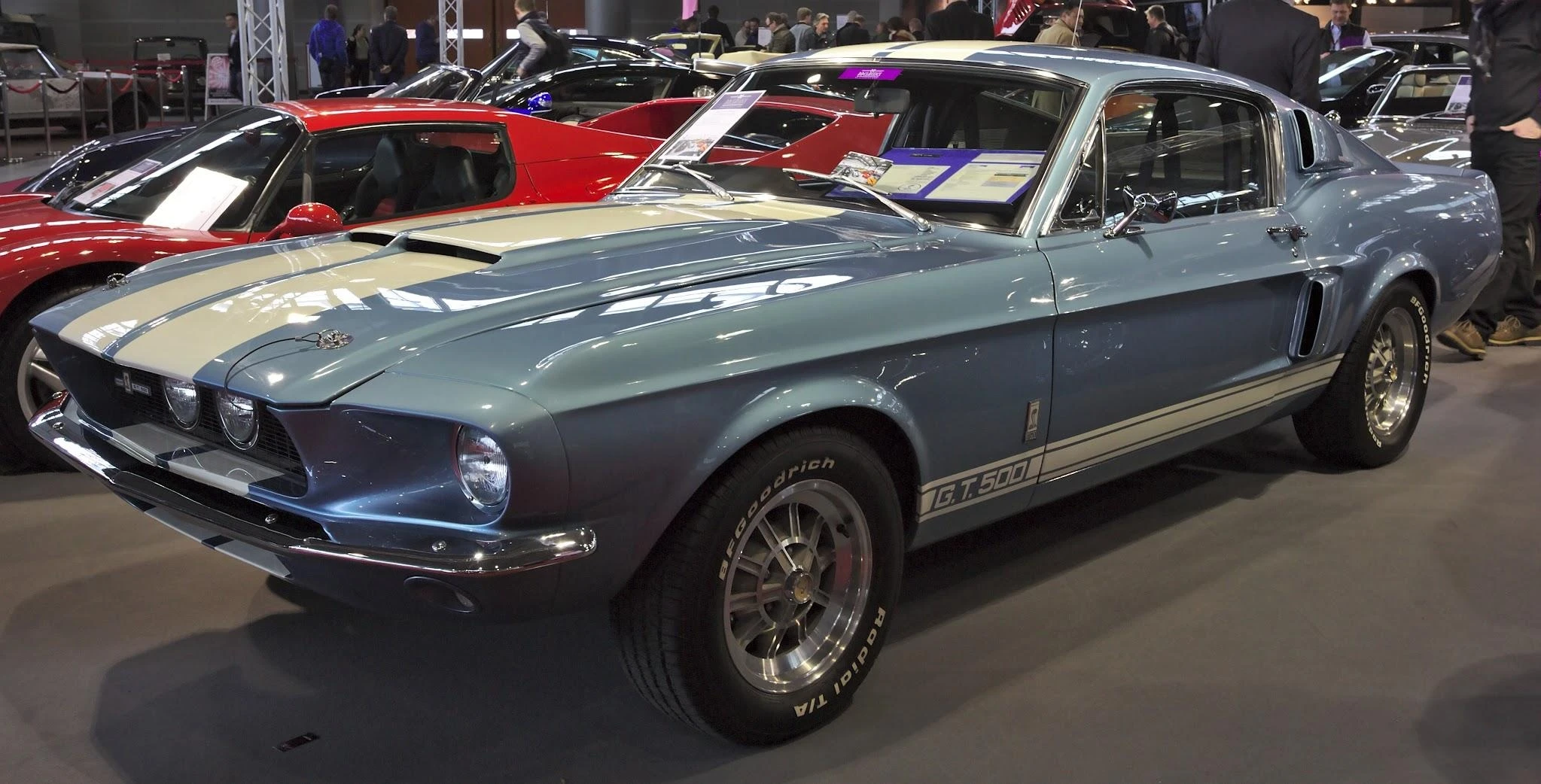
For many enthusiasts, that benchmark is the 1967 Shelby GT500. The model combines Shelby performance engineering, big-block V8 power, distinctive fastback design, and enduring collector appeal in a single package. Collector demand follows more than horsepower figures; collector demand follows significance, and significance comes from a combination of heritage, recognizability, and documented place within muscle-car history.
The GT500 occupies a unique position because the model connects the Shelby name, the Mustang platform, and the era that established the American muscle car as a cultural icon. Auction specialists evaluate authenticity records carefully because originality directly affects desirability. Restoration professionals focus on period-correct components because accurate restoration supports long-term value. Buyers examine documentation because provenance strengthens confidence in the vehicle’s history and condition.
That combination of rarity, historical relevance, recognizable styling, and collector demand explains why the GT500 frequently serves as the reference point during authenticity discussions. When collectors compare documentation standards, restoration quality, ownership records, and market interest, the GT500 provides a clear example of how authenticity and heritage work together to create enduring collector value.
Inspect Identification Numbers and Physical Details
A proper Shelby inspection should include the vehicle identification number, Shelby-specific identification plates, door tags, engine markings, transmission information, rear axle codes, body stampings, and date-coded components where applicable. The purpose is not only to find matching numbers. The purpose is to confirm that the car’s physical evidence agrees with its claimed story. A replacement engine, repaired body panel, or changed gearbox may be acceptable when clearly documented. Silence is the problem.
Physical details can reveal more than paperwork. Look at inner aprons, radiator support areas, floor pans, trunk structure, suspension mounting points, and firewall condition. Classic performance cars often lived hard lives. Drag racing, road use, corrosion, collision repair, and decades of modifications can leave clues. Fresh undercoating, overly smooth seams, mismatched fasteners, inconsistent welds, and poorly aligned panels deserve careful attention. A glossy finish can be a velvet curtain hiding a noisy workshop of old repairs.
Why Expert Inspection Matters
A general mechanic may identify leaks, worn brakes, and bad bushings, but a Shelby specialist understands the fine grain of the car. That specialist can evaluate whether body features are correct, whether components fit the claimed production period, whether restoration work respects original construction, and whether modern changes have been performed safely. This is especially important when the car has upgraded brakes, electronic ignition, improved cooling, newer suspension parts, aftermarket wheels, or replacement body pieces.
Modern parts can improve the driving experience, but poor installation can damage value and safety. A better radiator, upgraded wiring, improved fuel system, or stronger braking setup should be installed with clean routing, proper hardware, and respect for the car’s structure. Buyers should view modifications as a separate category from authenticity. Some changes improve drivability without erasing identity. Others turn a collectible car into a confusing mechanical collage.
Understand the Role of Modern Parts and Repair Practices
Classic Shelby ownership often sits between preservation and participation. Some owners want museum-level originality. Others want a car they can start confidently, steer accurately, stop safely, and enjoy on real roads. Modern repair practices help bridge that gap. Better diagnostic methods, improved metallurgy, upgraded sealing materials, precision alignment, advanced coatings, and higher-quality replacement components can make a classic car more dependable without stripping away its character.
Body and exterior repairs deserve special attention because Shelby styling is part of the vehicle’s identity. Scoops, fascias, valances, hoods, panels, and trim must be fitted with care. Even when repairs involve modern materials or replacement pieces, the result should look intentional, not improvised. Buyers researching repair approaches can learn how exterior upgrades affect fit, appearance, and road presence through discussions of body kit repair and fitment practices, especially when evaluating whether a classic performance car has been altered tastefully or patched together quickly.
Compare Classic Authenticity With Modern Performance Expectations
A classic Shelby was built for a different era of roads, tires, fuels, and safety expectations. That does not reduce its appeal. In many ways, it explains the charm. The driver feels the machine more directly. Still, anyone buying a valuable classic should understand the difference between period performance and modern performance. Contemporary Shelby models show how far braking, aerodynamics, cooling, transmission technology, and chassis tuning have advanced. A modern review of the 2020 Ford Mustang Shelby GT500 performance evolution helps place the classic car in context, showing how the Shelby name has continued to represent power while technology has transformed control.
That comparison is useful because it prevents unrealistic expectations. A classic GT500 does not need to behave like a modern supercharged Mustang to be valuable or enjoyable. Its worth comes from heritage, design, mechanical feel, and documented identity. However, a buyer who plans to drive the car should still evaluate braking capacity, steering condition, tire age, suspension geometry, engine cooling, fuel delivery, and electrical reliability. Authenticity proves what the car is. Mechanical preparation determines how confidently it can be enjoyed.
Dedicated Brand Section
Revology Cars represents a modern approach to classic Mustang and Shelby-inspired performance motoring. The brand’s work reflects a growing buyer interest in vehicles that preserve vintage design language while benefiting from contemporary engineering, refined assembly standards, and improved drivability. This matters because many enthusiasts admire classic Shelby styling but want reliability, comfort, braking confidence, and predictable road manners that original-era cars may not provide without careful upgrading.
In the broader collector and enthusiast market, this approach helps clarify an important distinction. A fully original historic Shelby should be judged by documentation, provenance, and preservation standards. A modernized classic performance build should be judged by engineering quality, component integration, finish, safety, and driving experience. Both can be desirable, but they serve different buyers. Understanding that difference helps prevent confusion during the purchase process and gives buyers a clearer path toward the car that matches their purpose.
Review Restoration Quality, Not Just Restoration Claims
The phrase “fully restored” can mean almost anything unless supported by evidence. A proper restoration should include dated photos, invoices, specialist notes, component lists, and before-and-after documentation. Buyers should ask who performed the work, what parts were replaced, what parts were repaired, and what standards guided the project. Period-correct restoration has a different goal than a performance-focused rebuild. Neither is automatically wrong, but the seller must be clear about the path taken.
Pay close attention to systems that affect safety and reliability. Brake lines, fuel lines, steering components, suspension bushings, tires, wiring, cooling hoses, and engine mounts can determine whether the car feels trustworthy or temperamental. A beautiful Shelby with tired mechanical systems can become expensive very quickly. A carefully repaired car with documented modern upgrades may offer more enjoyment for a buyer who wants regular road use.
Ask the Questions That Reveal the Car
Before buying, ask direct questions. Is the engine original, rebuilt, replaced, or upgraded? Are the transmission and rear axle correct for the car? Has the body been repaired after collision damage? Are panels original, replacement, or reproduction? Which components are period-correct, and which are modern upgrades? Are there restoration photos? Has a Shelby or Mustang specialist inspected it? Is the seller willing to allow an independent inspection? A confident seller should not fear informed questions.
Conclusion
Verifying a classic Shelby before buying requires patience, evidence, and expert eyes. The process begins with documentation, continues through physical inspection, and ends with a clear understanding of how originality, restoration quality, and modern upgrades affect value and usability. A buyer should not reject every modified car, nor should they accept every shiny restoration. The better approach is to identify what the car claims to be, confirm what it actually is, and decide whether its condition matches the intended use.
A truly satisfying Shelby purchase is not built on excitement alone. It is built on proof, craftsmanship, and honest evaluation. When authenticity is verified and repair quality is strong, a classic performance car becomes more than a collector object. It becomes a machine with a trustworthy story, a safer road presence, and the kind of driving character that keeps the Shelby name alive from one generation of enthusiasts to the next.