
Electric Car Price Trends: What to Expect in 2025
Electric Car Price Trends: What to Expect in 2025 electric vehicles (EVs) have come a long way from futuristic prototypes and luxury exclusivity. In 2025, they’re not just mainstream—they’re redefining how we think about personal transportation. But as EV adoption continues to accelerate, the burning question for consumers and industry watchers alike is: what’s happening to prices?
Will EVs become more affordable across the board? Or will innovation and raw material constraints push them further out of reach? The answers lie in supply chains, government policies, technological breakthroughs, and shifting market dynamics. Buckle up—because the road ahead is as dynamic as the EV revolution itself.
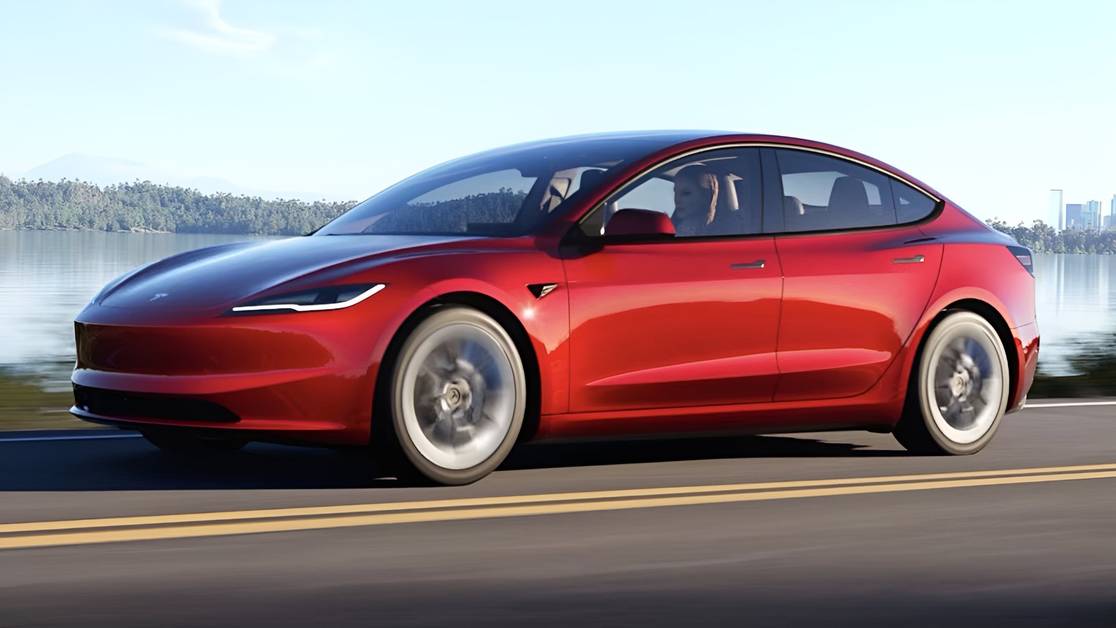
Global Context: EVs Take the Wheel
Globally, EV sales are projected to exceed 20 million units in 2025, a dramatic leap from just five years ago. This exponential growth is not just due to environmental awareness or flashy new models—it’s economic. Government incentives, rising fuel prices, and expanding charging infrastructure are changing the cost-benefit equation for consumers.
And with these shifts, electric car price trends are evolving in fascinating, sometimes unexpected ways.
Average Price Tag: The Descent Begins
In 2020, the average price of a new EV in the U.S. hovered around $55,000. By 2023, it had started to dip—thanks in part to brands like Tesla, Hyundai, and Chevrolet slashing prices to remain competitive. The trend continues in 2025, with the average price for a new electric car expected to land around $47,000.
Key players are undercutting the luxury EV narrative, instead focusing on mass-market accessibility. Automakers are scaling production, benefiting from economies of scale, and sourcing cheaper lithium-iron-phosphate (LFP) batteries. These forces are combining to lower prices for the everyday driver.
This is one of the most promising electric car price trends—a slow but steady move toward price parity with internal combustion engine (ICE) vehicles.
Battery Costs: The Invisible Price Driver
Batteries account for about 30–40% of an EV’s cost. So, when battery prices fall, EVs follow suit. In 2025, the cost of lithium-ion batteries is expected to fall below $100 per kilowatt-hour for the first time—a psychological and economic milestone.
Manufacturers are shifting toward LFP batteries, which are not only cheaper to produce but also safer and longer-lasting. This chemistry shift, combined with vertical integration (think Tesla’s Gigafactories and BYD’s in-house battery lines), is reducing dependency on volatile global supply chains.
Electric car price trends are being shaped heavily by battery innovations. As solid-state battery prototypes get closer to mass production—offering higher energy density and faster charging—the next wave of price disruption could be even more dramatic.
Affordable EV Models: A Surge in 2025
2025 marks the debut or expansion of several low-to-mid priced EVs targeting the $25,000 to $35,000 price range. Among them:
- Chevrolet Equinox EV – Targeted MSRP under $30,000
- Volkswagen ID.2 – Slated for the European market, priced around €25,000
- Nissan Leaf 2025 Refresh – Expected to drop closer to $28,000
- Tesla Compact Model – A long-rumored $25K Tesla may finally see daylight
These models are reshaping electric car price trends, shifting focus from luxury and performance to practicality and affordability without compromising on range or safety.
Luxury EVs: A Different Trajectory
Not all prices are heading south. The luxury segment continues to climb, propelled by brands like Lucid Motors, Mercedes-Benz EQ series, and Porsche’s Taycan lineup. These vehicles push boundaries on performance, design, and tech—but at a premium.
The 2025 Lucid Gravity SUV, for instance, starts above $80,000. Similarly, the Mercedes EQS Maybach targets a hyper-niche segment where price is less a factor than innovation and status.
Within this context, electric car price trends demonstrate a widening chasm between luxury and mass-market offerings—a divergence similar to what we’ve seen in smartphones or watches.
Used EV Market: Finally Heating Up
With more EVs aging out of their first ownership cycle, the used EV market in 2025 is expected to explode. Prices for three-year-old EVs are projected to drop by 15–20% compared to new models. Government incentives are expanding to include used EVs in several countries, making them even more attractive.
Consumers skeptical about paying top dollar for new tech now have a solid alternative. This development is particularly powerful for younger buyers and urban drivers looking for value and efficiency.
The rise of secondhand sales is reshaping electric car price trends, giving budget-conscious consumers a way into the EV ecosystem without compromising on quality.
Regional Trends: A Tale of Three Continents
North America
U.S. and Canadian consumers benefit from a variety of tax incentives in 2025, including the Clean Vehicle Credit (up to $7,500) and state-level perks like rebates and HOV lane access. Prices are stabilizing as domestic manufacturing picks up, particularly from Tesla, GM, and Ford.
However, tariffs on Chinese-made EVs and batteries may keep certain low-cost imports out of reach, slightly elevating baseline prices compared to Europe or Asia.
Europe
Europe is seeing accelerated affordability thanks to heavy government subsidies and aggressive climate mandates. France, Germany, and the Netherlands are spearheading grants that make EVs accessible to lower-income households. Local manufacturing by Stellantis, VW, and Renault also plays a key role.
Expect electric car price trends in Europe to lean toward compact, efficient city cars rather than performance SUVs.
Asia
China remains the world’s largest EV market, where vehicles like the Wuling Hongguang Mini EV are available for under $6,000. BYD’s expansion into global markets introduces price pressure worldwide, while India’s push toward EVs is fostering a wave of ultra-affordable models.
Asia’s electric car price trends reveal how local innovation, scale, and policy alignment can dramatically slash costs—setting a template for the rest of the world.
The Subscription Model: Owning vs. Accessing
2025 is also the year of alternatives. More automakers are offering subscription-based access to EVs, allowing users to pay a monthly fee that includes the car, insurance, and maintenance. Brands like Volvo, Hyundai, and NIO are experimenting with flexible leasing and battery-as-a-service (BaaS) models.
This shifts the focus away from outright ownership toward mobility-as-a-service—bending traditional electric car price trends and creating more pathways for entry.
Autonomous Features: The Optional Premium
As more EVs come equipped with Level 2 or Level 3 autonomous systems, the price difference between tech-enabled trims can be significant. Tesla’s Full Self-Driving upgrade, still optional, costs up to $12,000. Mercedes, BMW, and others offer similar features, which could account for a 10–20% price bump on high-end models.
Consumers must weigh value against novelty. As the tech matures and regulation catches up, these premiums may shrink—but for now, they remain a notable factor in electric car price trends.
Charging Infrastructure: The Hidden Cost Factor
The growth of public charging networks impacts pricing in subtle but powerful ways. Home charging is often cheaper, but for urban dwellers, public access is key. In regions with robust, affordable fast-charging options, consumers may be more willing to invest in EVs—even if sticker prices are higher.
Automakers are also bundling free charging for limited timeframes into the purchase price, an incentive that effectively offsets initial costs. Think of it as the Netflix model—subscribe now, and enjoy added value at no extra charge (for now).
Government Policy: The Puppet Master of Price
Policy remains the strongest lever in controlling electric car price trends. Tax credits, manufacturing subsidies, carbon taxes, and regulatory deadlines all shape the market.
In 2025, governments in the U.S., EU, and parts of Asia are prioritizing domestic EV production, limiting dependency on imports, and incentivizing green supply chains. These moves stabilize prices by insulating against global shocks and boosting consumer confidence.
Watch closely: if policy remains pro-EV, prices could continue trending downward. If not, volatility may return—particularly in emerging markets.
Outlook to 2030: Price Parity and Beyond
Most analysts agree that by 2030, EVs will reach full price parity with ICE vehicles—if not earlier. But 2025 is the tipping point.
From tech trickle-down effects to battery breakthroughs and policy momentum, the foundation is being laid now. Expect prices to become more stratified: ultra-luxury will soar, while mass-market vehicles dive lower.
And as more consumers factor in lifetime ownership costs—fuel, maintenance, and resale value—EVs will win on both initial price and total cost of ownership.
Final Thoughts
The EV market in 2025 is bursting with potential, but it’s also being recalibrated. The perception that electric cars are for the wealthy or tech-obsessed is rapidly evaporating. With more models, smarter policies, and evolving battery tech, electric car price trends are bending in favor of the consumer.
Whether you’re looking for a $25,000 compact or a $100,000 luxury machine that drives itself, 2025 will offer something for every budget and lifestyle. The electric future isn’t just coming—it’s getting cheaper, smarter, and more exciting by the day.